Bots in 2026 are rarely the cartoon version. Not the empty avatar with "DM for promo" in the bio. A lot of fake activity now looks… fine. The profile has a face. The posts look normal at first glance. The comments sound friendly. You could scroll right past it and never think twice.
And that is exactly why it works. Fake engagement is not trying to convince you it is fake. It is trying to convince you it is normal.
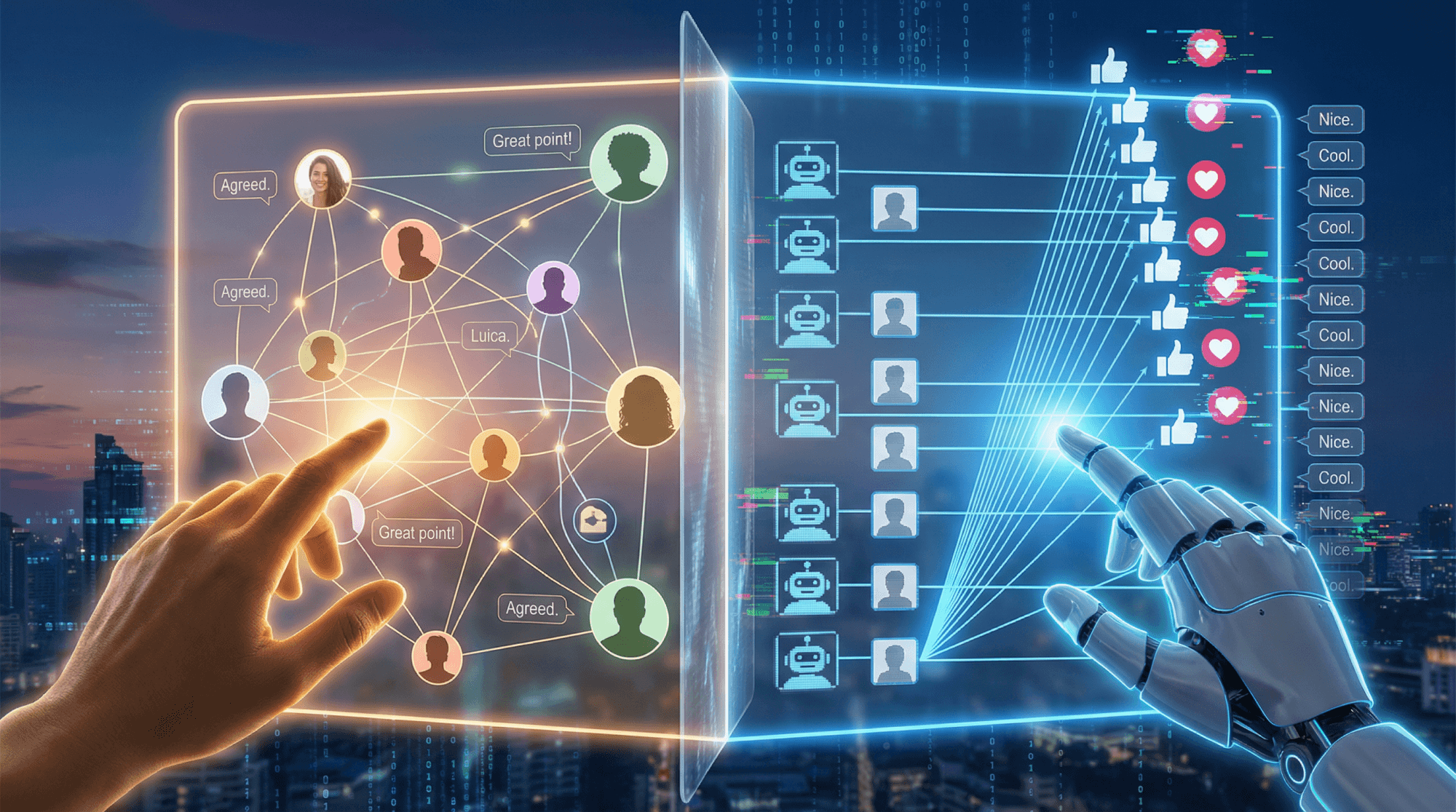
Fake engagement often feels like applause in the wrong room. Loud. Fast. A little detached from what was actually said.
I am not going to tell you to audit every profile you see. Nobody wants to live like that. What helps is a softer skill: noticing mismatch. When the identity, behavior, and social context do not line up, that is when you slow down.
A simple approach that keeps you sane
Do not hunt for one "gotcha". Look for a cluster of small mismatches. One odd detail is normal. Several odd details in the same direction usually are not.
What real people tend to look like online (even when they are polished)
Real accounts usually have some friction. A few posts that do not match perfectly. A stretch of silence. A weird interest. A photo that is not optimized. Something that looks like an actual person used the account on a Tuesday night, not a system trying to look like a person used it.
Fake accounts can be messy too, but the mess often feels manufactured. Like "randomness" selected from a menu.
1) The profile feels like a costume
This is a vibe check, but it is a useful one. Some accounts feel built to be usable: follow, like, comment, disappear. They look complete, but not lived in. The bio says the right kind of things. The highlights look tidy. The posts are generic enough to fit anywhere.
When I open a profile and I cannot picture the person behind it doing anything except "being an account", I get cautious.
2) The posts and the social graph do not match
Look at what the account posts, then glance at who it follows and who follows it. Real people usually have some pattern: a city, a language, a friend group, a hobby cluster. It does not need to be consistent, it just needs to make sense.
Suspicious graphs often look like confetti. Fitness posts, but the following list is thousands of unrelated accounts across random topics. Local-looking profile, but most followers appear disconnected from the language and location. You can feel that the network was assembled, not grown.
3) The comments are grammatically fine, socially empty
New bot comments are often "nice" in the most interchangeable way. "So inspiring." "Love this." "Amazing content." They fit under almost any post, which is the problem. Real comments tend to grab onto something specific: a detail, a joke, a question, a small disagreement, a shared memory.
If the comment section reads like a wall of polite noise, it is usually not a community. It is theater.
4) The timing feels switched-on
Real engagement is uneven. People show up in waves, then drift off. Replies come with delays. Threads breathe.
Manufactured activity often arrives like a button was pressed. A burst of likes and generic comments lands quickly, then nothing develops. No back-and-forth, no recognizable people returning, no follow-up that suggests anyone actually cared. Just numbers.
5) The numbers rise, but the behavior does not
This one is underrated. You see a post with a lot of likes, but the comments are thin and bland. Or an account gains followers, but those followers never show up again anywhere. No real replies. No repeat names. No humans acting human.
Real interest leaves fingerprints. People come back. They ask things. They argue. They share privately. They show up again next week.
6) The account behaves like a strategy
Some accounts feel like they exist mainly to touch your notifications. They follow you, like a few posts, maybe drop a generic comment, then go quiet. Later they do it again. It is not "social", it is mechanical.
This does not prove anything on its own. Plenty of real people are awkward online. But when this pattern sits next to a costume profile and template comments, it adds weight.
7) You keep seeing the same "family" of accounts
Once you notice it, you cannot unsee it. Similar usernames. Similar emoji style in the bio. Similar posting cadence. Similar profile-photo look. Different faces, same structure.
Real people are diverse in their weirdness. Fake networks are diverse in cosmetics, consistent in shape.
8) The audience looks oddly global for a very ordinary account
Some accounts are naturally international: memes, fandoms, language learning, big creators. But most everyday accounts are local by default. Friends and neighbors cluster by language and location.
If a small, local-looking profile has a follower base scattered across unrelated regions with no shared language, and the comment style is generic praise, that combination often points to purchased followers or engagement schemes.
9) The same talking point repeats, but nobody actually talks
Not all manipulation is "nice" bots. Sometimes it is coordinated framing. Multiple accounts push the same message with slightly different wording so it looks organic. The giveaway is repetition without conversation. It feels like a chorus performing at you, not people responding to each other.
10) Your gut notices the mismatch, then you talk yourself out of it
This is the most human part. Most people sense when something is off. Then the numbers show up and you override yourself: "It has 50k likes, so it must be real." In 2026, that logic breaks more often than people think.
If it feels like a room clapping without listening, trust that feeling long enough to pause.
What you can do in 15 seconds
You do not need a toolkit. Do the smallest check: open a few of the loudest commenters. Not the ones you already recognize as real. The loudest ones you do not know. If they look like templates, if they do not have lived-in behavior, if their networks feel assembled, you have your answer.
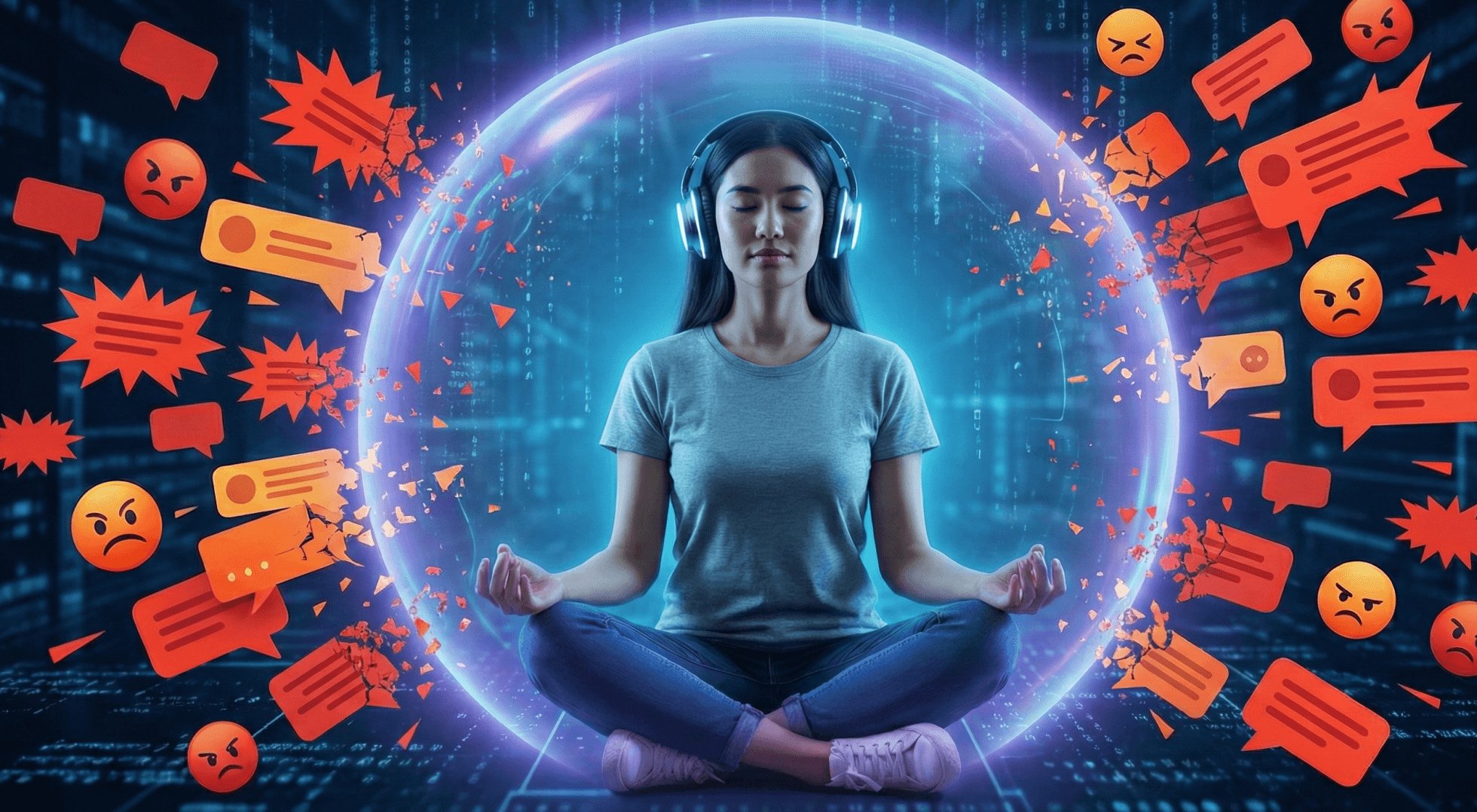
That is enough to protect yourself from most scams, fake trends, and "social proof" tricks. You are not trying to win an argument. You are just refusing to be steered.
Real people are messy and specific. Fake activity is polished, repetitive, and slightly hollow. Once you start noticing the difference, it becomes hard to miss.