Open any social app on an average Tuesday and it can feel like you walked into a room where everybody is doing better than you. Better city. Better relationship. Better body. Better mornings. Better money. Better pace.
And the annoying part is that you can know, intellectually, that it's curated… and still feel it.
The feed doesn't show how life is. It shows what life looks like when it's edited for attention.
I don't think this is just "insecurity" or "lack of discipline". It's a predictable effect of the medium. Social media is a weird kind of window: it shows you people, but not their days. It shows outcomes, but not the hours that led to them. It shows a moment that made the cut.
The feed is a selection engine, not a diary
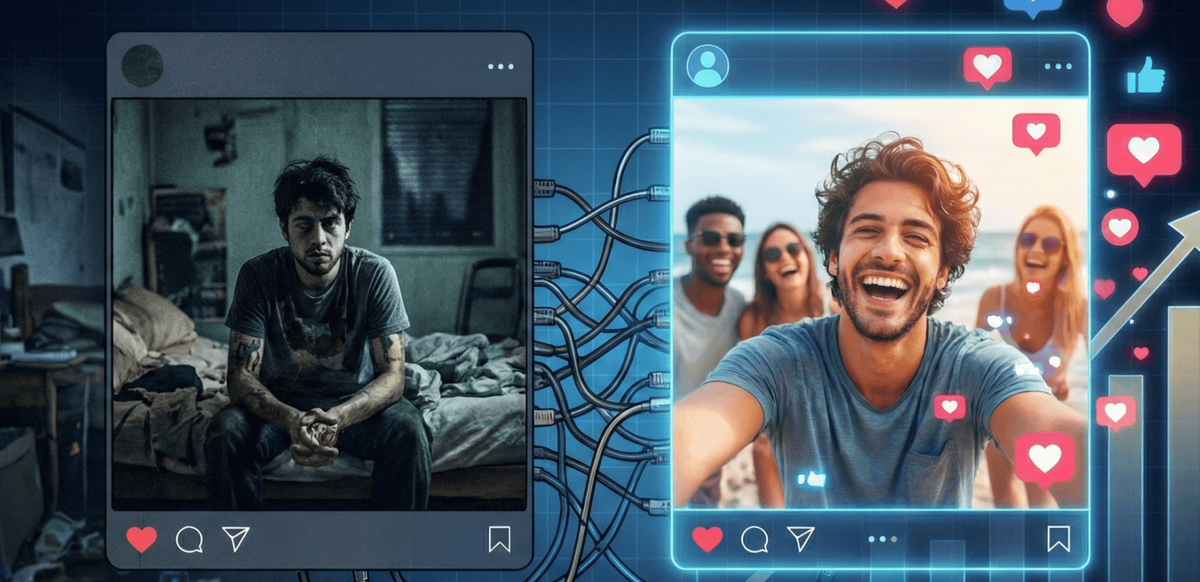
In ordinary life you see the whole messy range: the unfinished plans, the arguments, the quiet parts, the long boring stretches, the "I have no idea what I'm doing" days. Online, most of that disappears, because it doesn't travel well.
What travels is clean. Visually simple. Emotionally obvious. Socially easy to read. A nice photo at the end of a long project. A promotion announcement. A new apartment. A relationship milestone. A "before and after". The feed doesn't force anyone to post only those things, but it rewards them. That's enough.
So you end up comparing two different kinds of information. Your internal, continuous experience against somebody else's external, selected evidence.
The comparison shortcut your brain takes
You: a full timeline (doubt, effort, small wins, awkward days, the messy middle).
Them: a chosen moment (milestone, reveal, celebration, proof of progress).
Those are not comparable, but they feel comparable when they're presented the same way on a screen.
The "hundreds of people" problem
Offline, your comparison set is limited. You might compare yourself to coworkers, friends, siblings, a few people you actually know. Online, you can compare yourself to hundreds of people before you finish your coffee.
Your brain does not process that like a statistic. It processes it like a vibe. Ten wins in a row does not land as "ten people had good moments". It lands as "this is normal".
And then there's the big unspoken detail: the stream is not random. It's tuned to keep you there. Content that triggers feeling tends to get shown more, because feeling keeps you scrolling. That doesn't have to be a conspiracy. It's just what happens when the goal is watch time.
"I know it's curated" isn't a shield
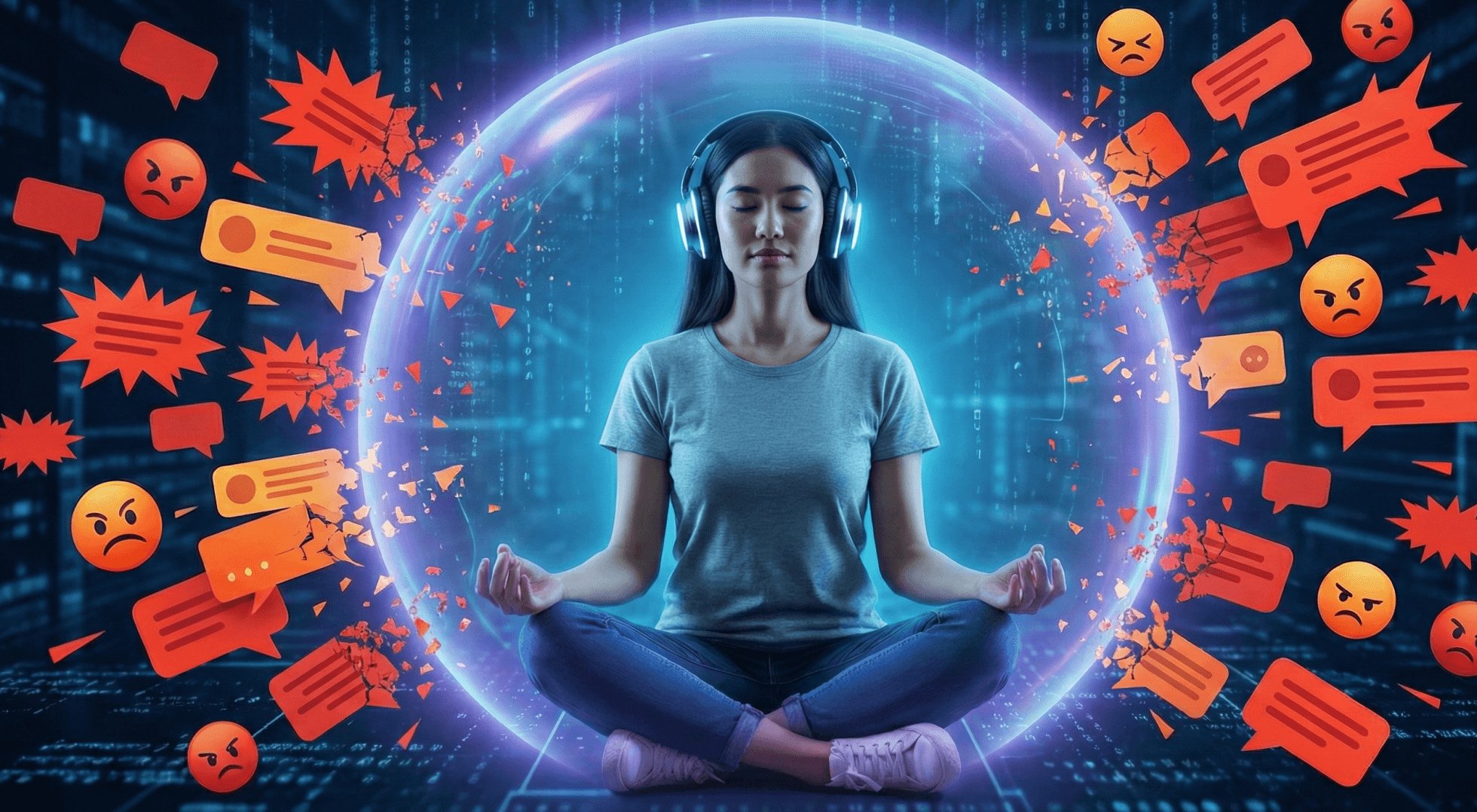
A lot of people blame themselves for being affected. They tell themselves they should be above it. I get the impulse, but it's not how emotions work. Images hit first. Explanations arrive later.
Also, the posts are not always fake. Someone really did move to a new city. Someone really did get engaged. Someone really did build a body they're proud of. That truth can make it worse, because it turns into a timeline comparison: "They're doing it, why aren't I?"
What you don't see is the trade-offs. The bill. The parts that didn't fit into the frame. The loneliness of moving. The stress behind the success. The boring repetition behind the "discipline" photo. You see the benefit and miss the cost, so the math feels unfair.
Why the feed makes "progress" look like an aesthetic
Some of the most valuable progress is slow and invisible: getting calmer, getting better at a job, learning to manage money, building a relationship that actually works, recovering from something, becoming less reactive. None of that photographs well. It looks like nothing, until it looks like everything.
Meanwhile, visible progress is easy to package. The proof is the post. The evidence is the image. The caption is the story.
After a while, it can mess with your sense of what counts. If you can't show it, it can start to feel less real, even if it's the only kind of progress that lasts.
When the interface turns into a scoreboard
Even if you're not chasing followers, the numbers are sitting there. Views. Likes. Comments. Saves. It's hard not to read them as social grades. You might tell yourself you don't care, but it's still information your brain picks up.
That can slide into a status lens: you start looking at your own life through "how does it look?" instead of "how does it feel?" And once you're in that lens, the feed becomes a constant reminder that someone, somewhere, looks like they're winning.
So how do you stop comparing, without turning your life into homework?
I don't think the goal is to never compare. Comparison is part of being human. It's how we learn norms. It's how we find role models. It's how we decide what's possible.
The problem is high-volume, context-free comparison. It's like trying to judge your life while standing in front of a wall of movie trailers, back-to-back, all day. Of course it messes with you.
What helps is not a perfect mindset. It's changing the conditions. A small shift is to label what's happening in real time: "I'm seeing outcomes, not days." Another shift is to notice what isn't shown: trade-offs, costs, the parts that didn't make the cut.
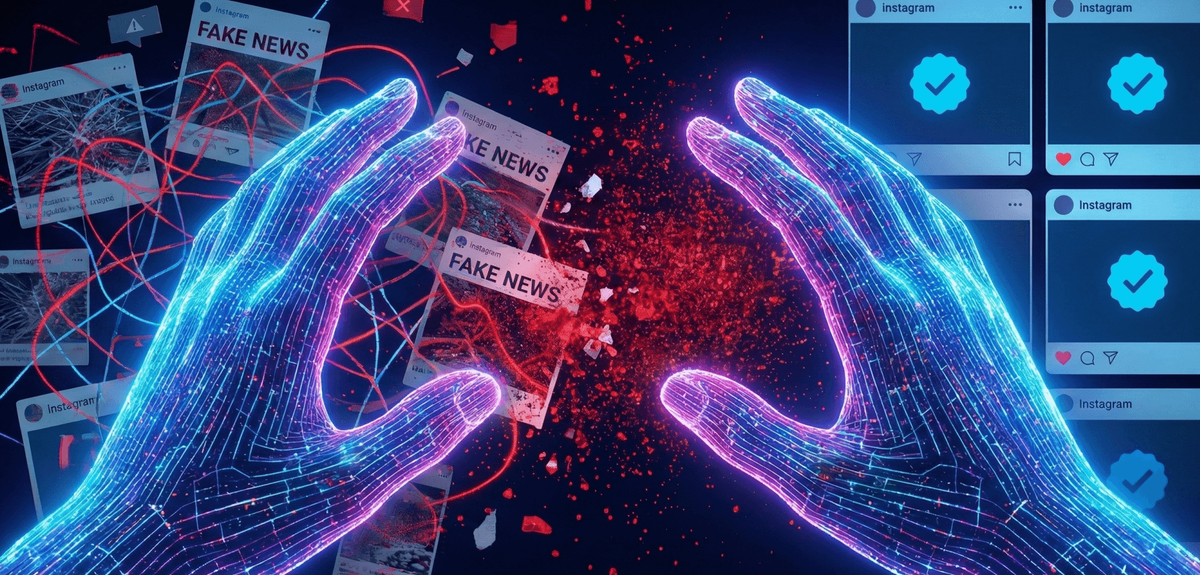
And the most useful reframe I've found is simple: the feed is incomplete data. Treat it like a partial dataset, not a verdict.
Return to your timeline
The feed's biggest lie is that everyone is on the same timeline and you're late.
Real life doesn't work like that. People move through seasons. Someone is thriving in one area and struggling in another. Someone looks calm online and feels anxious at night. Someone posts a big win after a year of quiet losses. Someone disappears for months because they're dealing with something they don't want to explain.
Once you remember that, the spell loosens. Social media can still be fun, useful, even inspiring. It just stops being a scoreboard you didn't agree to play on.
Not a full life. Not a fair comparison. Not your timeline.