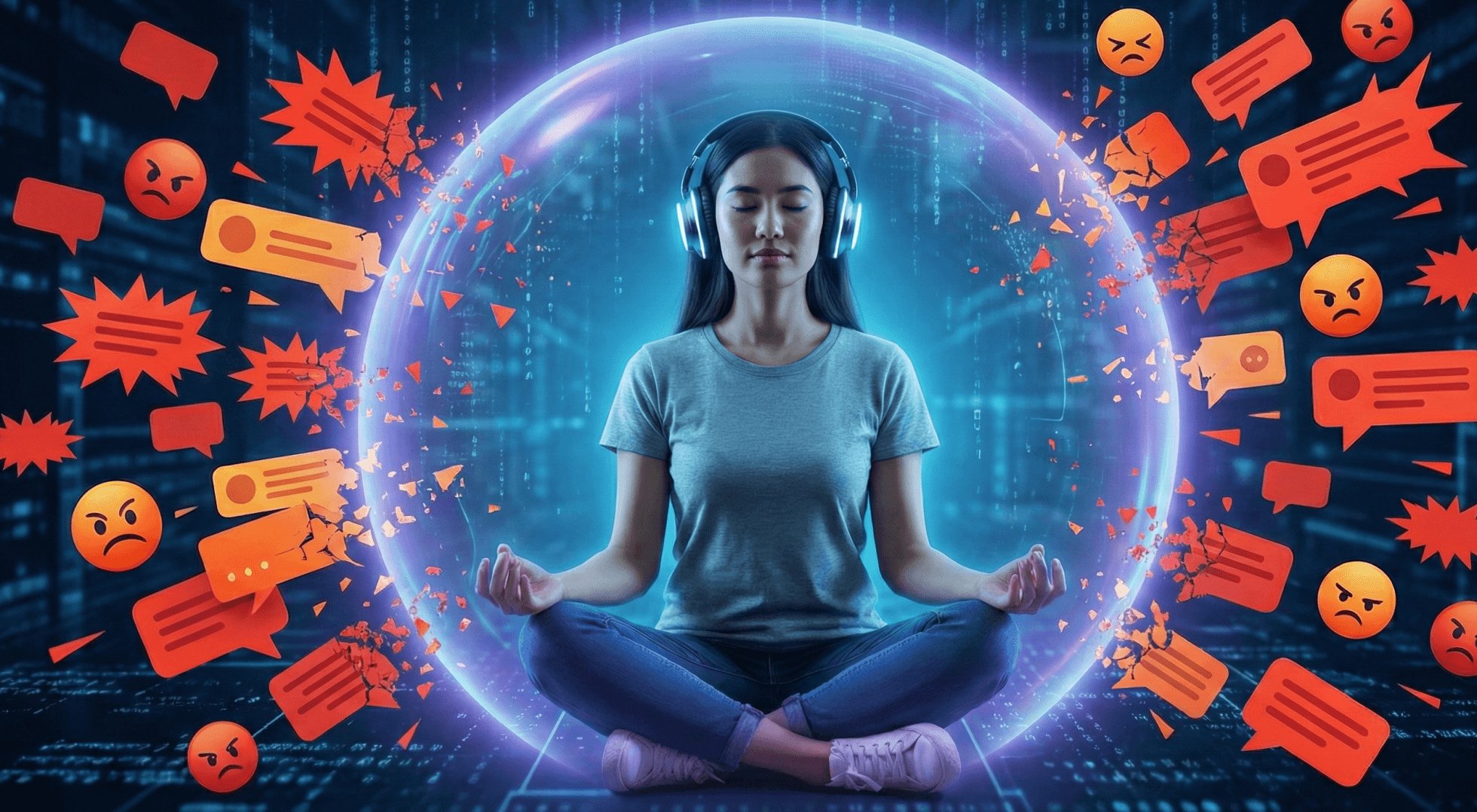
You open an app “for a minute,” check one thing, and suddenly it’s 47 minutes later. You didn’t even find what you came for - but you watched three unrelated videos, read two arguments, and somehow ended up feeling behind on life.
Most advice says “just stop using social media.” That’s not realistic for most people. Social apps are where friends share updates, creators post good stuff, communities organize, and news breaks. The goal isn’t quitting.
The goal is spending less time while getting the same (or better) value.
This article gives you a simple, repeatable system to:
- cut random scrolling,
- still keep up with friends and what matters to you,
- reduce FOMO,
- and make social feel like a tool again - not a slot machine.
You don’t need “more discipline.” You need a better system.
Step 0: Accept the truth nobody wants to hear
You can’t “not miss anything.” The internet produces infinite updates. Even if you scroll for hours, you still miss most of it - and you’ll forget 90% of what you saw.
So the real promise is different:
- You won’t miss anything important.
- You’ll stop wasting time on what only feels urgent.
That’s the whole game: separate “important” from “loud.”
The core idea: Replace “endless feed” with 3 small channels
Think of your social use as three modes:
- People Mode - friends, family, real relationships
- Interest Mode - hobbies, learning, entertainment you actually want
- News/World Mode - major events and updates that matter
The problem is that the main feed mixes all three together, plus ads, rage-bait, and random algorithm guesses. Your brain can’t “just scroll a little” because there’s no finish line.
The solution is to build three small, intentional channels and check them on purpose - instead of letting the feed decide.
1) Create a “Do Not Miss” list (10–25 accounts max)
This is the single most powerful move. You choose a small list of accounts that truly matter, like:
- your closest friends (or their main platform),
- 2–3 creators who consistently help you,
- 1–2 accounts for a hobby you love,
- one reliable source for your city / local community.
Rule: if the account posts often but rarely improves your life, it doesn’t belong.
Quick test
If this account stopped posting tomorrow, would you notice in a meaningful way?
Then, instead of opening the main feed, you check updates via:
- their profiles,
- your “Following” / “Friends” view (if available),
- or a dedicated list feature (some apps have lists / close-friends / favorites).
This turns social from “infinite” into “finite.” You can actually finish.
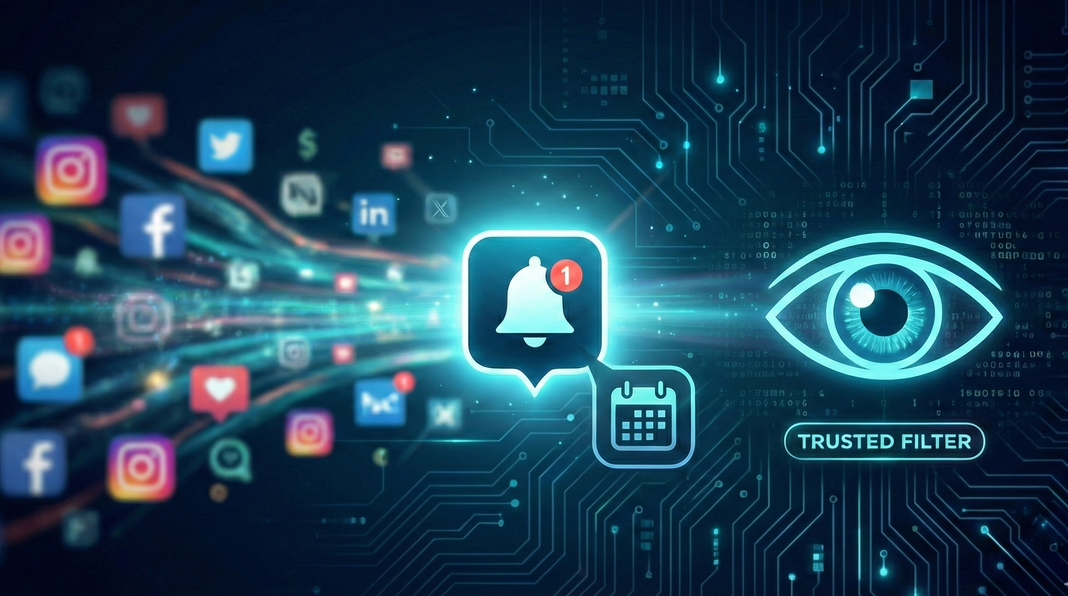
2) Kill 80% of notifications (keep only the “human” ones)
Notifications are not reminders. They are remote controls for your attention.
Keep only these categories:
- Direct messages from real people
- Mentions (if you need them)
- Calendar-like events you intentionally joined (optional)
Disable:
- “Someone posted”
- “You might like”
- “Trending now”
- “Recommended for you”
- random live alerts
Now, the app can’t pull you in 12 times a day. You decide when you go in.
3) Batch your social time (two short windows per day)
Instead of checking all day, choose two windows:
- 10 minutes midday (catch up)
- 10–15 minutes evening (reply + unwind)
That’s it. The point is not the exact number - it’s the rhythm.
Why batching works:
- it prevents “micro-checking” (the biggest time leak),
- it reduces anxiety (you know you’ll check later),
- it makes the feed less emotionally sticky.
Make it easier to stick to
Put social apps off your home screen or into a folder called “Later.” Add one small friction step.
4) Use a “Trusted Filter” for news (so you don’t doomscroll)
A lot of “missing out” fear is actually news anxiety. People scroll because they don’t want to be uninformed.
Instead, pick one of these low-effort filters:
- a daily email digest you trust,
- a single reliable news app notification (one per day max),
- a “weekly recap” podcast while walking,
- or one account that summarizes news without outrage.
The point: get informed on purpose instead of absorbing an endless stream of hot takes.
5) Replace “scrolling” with “searching”
When you open social, ask: What am I here for?
If the answer is specific (“I want a workout idea” / “I want to see updates from friends” / “I want that tutorial”), then don’t scroll the home feed. Use:
- search,
- bookmarks/saved posts,
- profiles,
- topic pages.
Search gives you control. The feed takes it away.
6) Stop “training the algorithm” by accident
Algorithms are like overeager assistants: they assume everything you pause on is what you want more of.
If you want less time, you need fewer rabbit holes. Try this:
- Don’t like things you don’t want to see again (even if it’s “funny once”).
- Mute/unfollow quickly when you feel drained.
- Save privately instead of commenting when you don’t want more of that topic.
- Use “Not interested” more often than you think.
This makes your feed calmer over time - which makes it easier to leave.
7) Use the “Two-Minute Rule” to prevent accidental sessions
If you open social without a plan, you’re one swipe away from losing time.
Here’s a simple rule:
If you can’t name what you’re about to do in 10 seconds, close the app.
Or use the “two-minute” version:
- Open app.
- Do one specific thing (reply, check updates, find a post).
- Close in under 2 minutes.
Two minutes is short enough to avoid the trance, long enough to handle real-life messages.
8) Weekly reset (10 minutes, once a week)
This is how you keep the system working long-term. Once a week:
- remove 3 accounts that don’t add value,
- add 1–2 accounts you truly like,
- clear your “saved” items into folders (optional),
- check if notifications stayed clean.
Think of it like cleaning your room. Social gets messy unless you tidy it occasionally.
A simple “no-FOMO” daily routine (example)
Daily plan (total: ~20 minutes)
- Midday (10 min): check “Do Not Miss” list + reply to messages
- Evening (10–15 min): explore one interest intentionally (search / saved posts), then stop
That’s enough to stay connected, stay informed, and still have your life back.
If you only do 3 things, do these
- Make a “Do Not Miss” list and check profiles instead of the home feed.
- Turn off most notifications (keep only DMs/mentions).
- Batch your usage into two short windows per day.
Those three alone usually cut social time dramatically - without feeling like you’re missing out.
Final thought: The goal is not less social - it’s better social
Social media isn’t inherently bad. The problem is the default mode: infinite, mixed, and designed to keep you there.
When you switch to an intentional system - lists, batching, trusted filters, and search - you can get the good parts without donating hours of your day.
You won’t miss anything important. You’ll just stop giving “the loudest stuff” so much of your time.